
Providing pupils with the best, most up-to-date equipment and facilities can contribute to an improved school. We have all equipment and facilities at school where the students are learning in comfortable environment.
SCIENCE LAB
Science laboratories in schools and colleges provide students with essential hands-on learning experiences that complement theoretical knowledge. These labs are equipped with specialized apparatus, tools, and resources for various scientific disciplines like physics, chemistry, biology, and environmental science. Beyond equipment, labs also foster critical thinking, problem-solving skills, and a deeper understanding of scientific concepts through experimentation and observation.
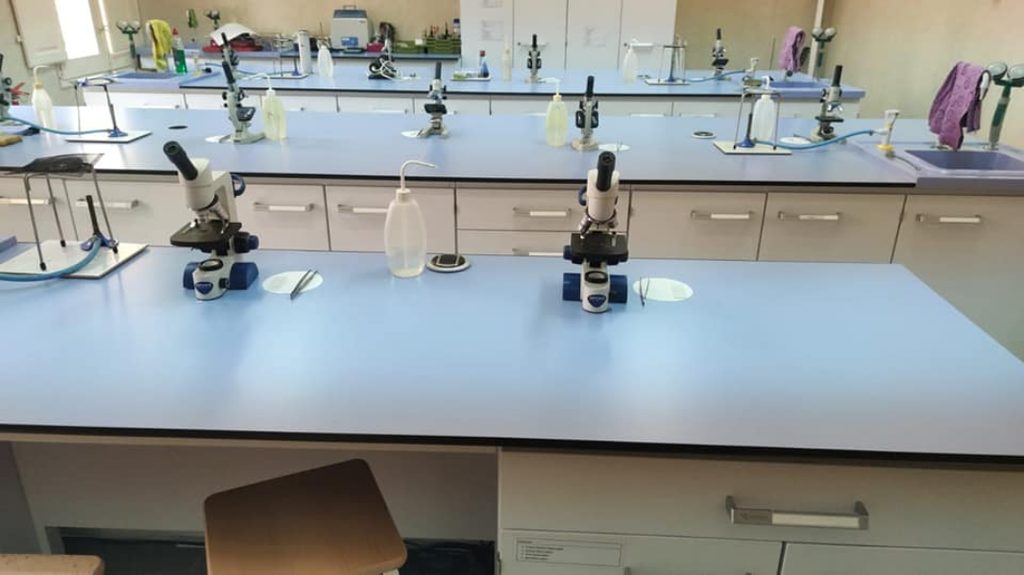
Key Facilities and Equipment of our Science Lab:
- Subject-Specific Areas:Labs are often organized into sections for physics, chemistry, biology, and other sciences, each equipped with relevant apparatus and materials.
- Experiment Stations:Workbenches are equipped for individual or group experiments, providing students with space for observations, data collection, and analysis.
- Essential Tools and Apparatus:Labs include items like microscopes, glassware, electrical circuits, measuring instruments, and more.
- Safety Equipment:Safety is paramount, with labs featuring fire extinguishers, eyewash stations, fume hoods, first-aid kits, and personal protective equipment like gloves and goggles.
- Storage and Ventilation:Proper storage for chemicals and materials, along with good ventilation and lighting, are crucial for a safe and functional lab environment.
- Educational Resources:Lab manuals, instructional guides, and digital resources are available to support students during experiments and provide background information.
Benefits of Science Labs:
- Enhanced Learning:Hands-on experience helps students grasp scientific concepts more effectively than theoretical study alone.
- Skill Development:Labs foster critical thinking, problem-solving, and teamwork skills, all crucial for scientific endeavors.
- Scientific Inquiry:Labs encourage students to ask questions, test hypotheses, and interpret results, promoting a deeper understanding of the scientific method.
- Increased Engagement:Experiential learning makes science more engaging and relatable for students, sparking their interest and curiosity.
- Career Preparation:Labs provide students with practical skills and knowledge that are valuable for future careers in science and related fields.
In essence, science labs are not just places for experiments; they are vital spaces for students to develop a strong foundation in science, cultivate essential skills, and foster a lifelong passion for discovery.
COMPUTER LAB
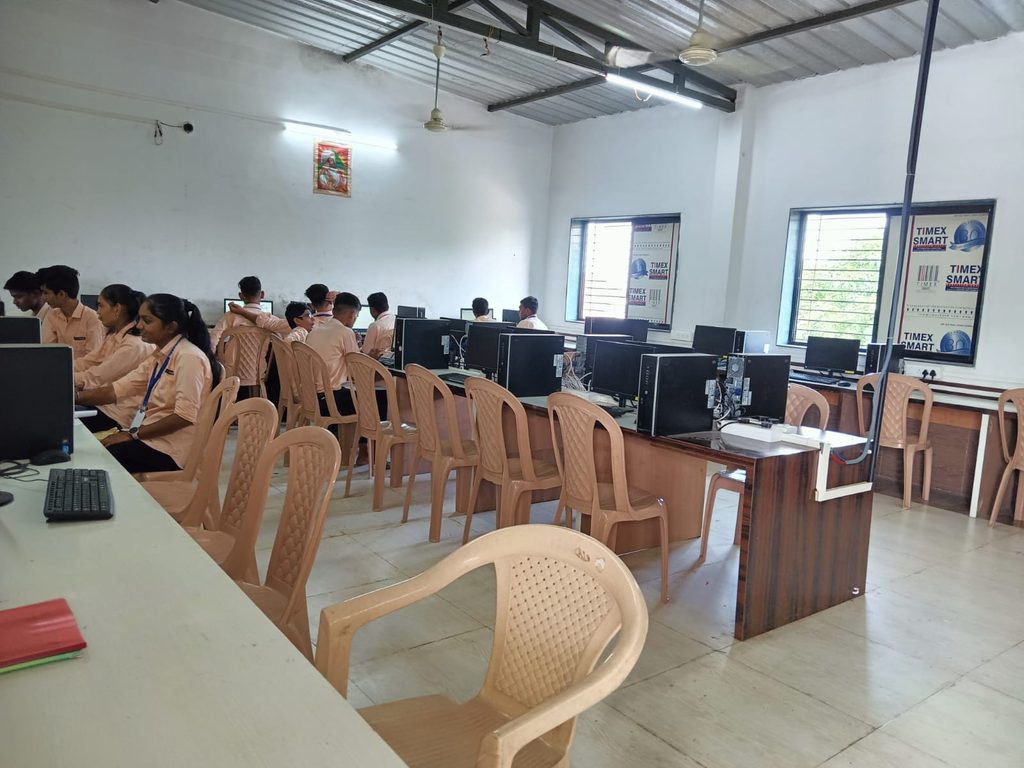
Benefits of our Computer Lab:
- Access to Technology:Computer labs ensure that all students, regardless of their access to personal devices, have access to computers and the internet for educational purposes.
- Digital Literacy:Computer labs provide structured learning environments for developing essential computer skills, including using software, navigating the internet, and understanding cybersecurity.
- Enhanced Learning:Access to computers and specialized software allows students to engage with learning in new and interactive ways, such as through multimedia projects, virtual simulations, and online research.
- Collaboration and Teamwork:Computer labs facilitate collaborative learning experiences, allowing students to work together on projects, share ideas, and learn from each other.
- Career Exploration:Computer labs introduce students to various software and technologies relevant to different industries, potentially sparking interest in future careers in technology.
- Equal Access:Computer labs ensure that all students have the same opportunity to develop essential digital skills, regardless of their socioeconomic background or access to personal devices.
- Focused Instruction:Dedicated computer labs with a teacher or instructor can provide focused instruction on computer literacy and specific software applications
Facilities in Our Library

1. Extensive collection of books:
Libraries house a wide variety of books covering diverse subjects and interests, catering to different reading levels and needs.
2. Digital resources:
Libraries provide access to e-books, online journals, databases, and other digital materials for research and study.
3. Quiet study areas:
Designated spaces for focused individual study, equipped with comfortable seating and often with individual study carrels.
4. Group study rooms:
Rooms available for collaborative work, allowing students to discuss and learn together.
5. Computer and internet access:
Libraries offer computers with internet access for research, online learning, and completing assignments.
6. Printing and scanning facilities:
Users can print or scan documents for academic or personal use.
7. Librarian assistance:
Trained librarians provide guidance on research, information retrieval, and using library resources.
8. Reading rooms:
Comfortable spaces for leisure reading, often with comfortable seating and access to newspapers and magazines.
9. Audio-visual materials:
Libraries may offer access to DVDs, CDs, and other audio-visual resources for learning and entertainment.
10. Online access to e-resources:
Libraries subscribe to online databases and journals, allowing users to access academic materials remotely.
Computer labs offer numerous advantages for students, including access to technology, development of digital literacy, enhanced learning experiences, and opportunities for collaboration. They also provide a space for students to explore potential career paths related to technology.